How long do paver patios last? In Maryland, 25 to 50+ years when built right. See lifespan by material and what makes a paver patio last decades.
The Short Answer to How Long Do Paver Patios Last?
A properly installed paver patio in Maryland lasts about 25 to 50 years, and natural stone can last far longer. But that range hides the real story, because the number depends far less on the pavers themselves than on what goes underneath them.
What Makes a Paver Patio Last
A properly installed paver patio in Maryland lasts 25 to 50 years, and often longer.
- A patio built on a deep, compacted base with proper drainage and edge restraints will still be flat and solid decades from now.
- A patio laid on a shallow base with poor drainage can start shifting within a few winters.
The pavers are almost never what fails
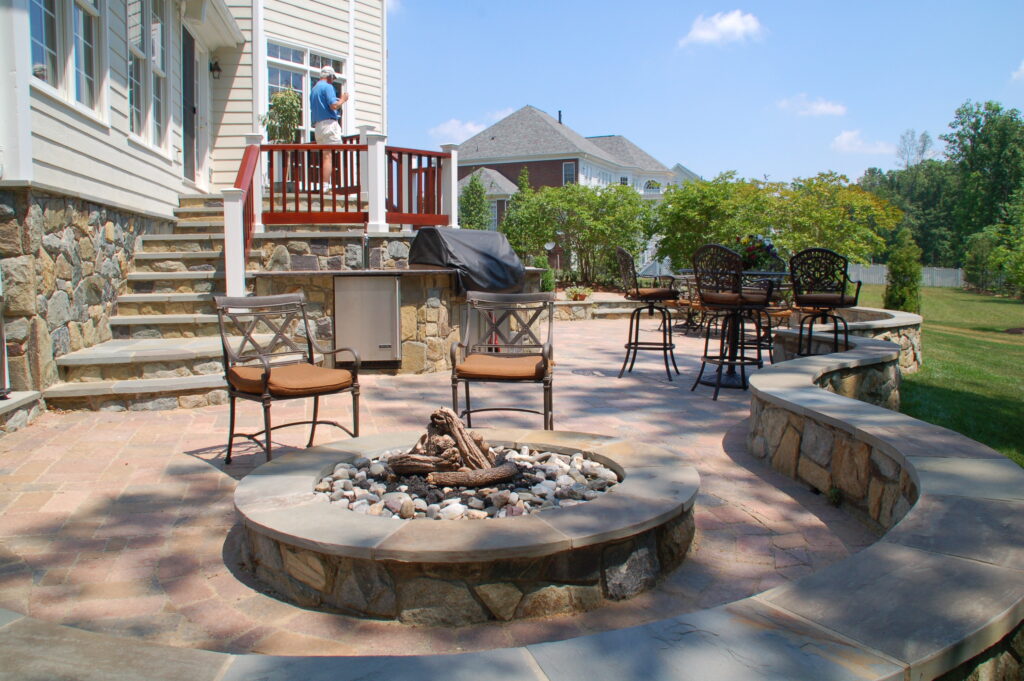
Pavers are dense, manufactured units that outlast the house. When a paver patio “fails” it is nearly always the base or the drainage underneath, not the paver stones on the surface. That single fact is the key to understanding how long do paver patios last, and it is what separates a patio that lasts 15 years from one that lasts 40 years.
How Long Do Paver Patios Last by Material?
The material you choose changes the ceiling on lifespan. Here is how the common options hold up in Maryland’s climate, on a properly built base:
Concrete Pavers (25 to 50 Years)
Concrete pavers are the workhorse of the industry and the most popular choice across Anne Arundel County.
Modern concrete pavers are manufactured under high pressure and heat, which makes them dense and durable. Color that runs all the way through the paver resists fading better than surface-dyed units.
Expect some softening of color over the decades, but the shape and structure hold for a very long time. When people ask how long do paver patios last, concrete pavers are usually what they have in mind.
Brick Pavers (30 to 50 Years)
Clay brick pavers keep their color because it is fired all the way through rather than coated on the surface. They offer a classic look that suits many Maryland homes.
The trade-off is that brick can chip more easily than concrete and can absorb water, so it needs a correct install to handle freeze-thaw well.
Natural Stone (50 to 100+ Years)
Bluestone, granite, and travertine are essentially the longest-lasting option you can put in a yard.
Natural stone does not really wear out; it develops a patina over time that many homeowners love. It costs more up front, but it can outlast everything else on the property.
Porcelain Pavers (30 to 50+ Years)
Porcelain is the newer option. It is non-porous, so it shrugs off stains and freeze-thaw with very little maintenance.
Porcelain needs a careful, precise installation to sit correctly, which is where an experienced crew matters.
Notice the pattern: every one of these materials outlasts a poured concrete slab. The difference between a short-lived patio and a decades-long one comes down to the base and drainage, not the material on top.
Why the Base Decides How Long Paver Patios Last
Two patios that look identical on the day they are finished can be decades apart in how long they last, and the difference is buried in the base.
Here is what actually drives the outcome:
Base depth and compaction
A deep, well-compacted crushed-stone base is the foundation of the entire patio. Too shallow or poorly compacted, and the surface settles unevenly over time.
On our own paver patio projects, we build with a minimum five-inch compacted base, deeper than the four inches many installers use, for better long-term performance through Maryland winters.
Drainage and grading
Water that sits, freezes, and heaves is the single biggest threat to a patio. Proper slope moves water away from the house and away from the patio base.
This is why thoughtful drainage and grading is part of building a patio that lasts, not an afterthought.
Edge restraints
Without a locked perimeter, freeze-thaw cycles slowly spread the field of pavers apart. Edge restraints hold everything tight for the life of the patio.
Joint sand
Polymeric sand hardens in the joints, resists weeds, and keeps individual paver stones from shifting.
Maryland’s climate makes all of this matter more
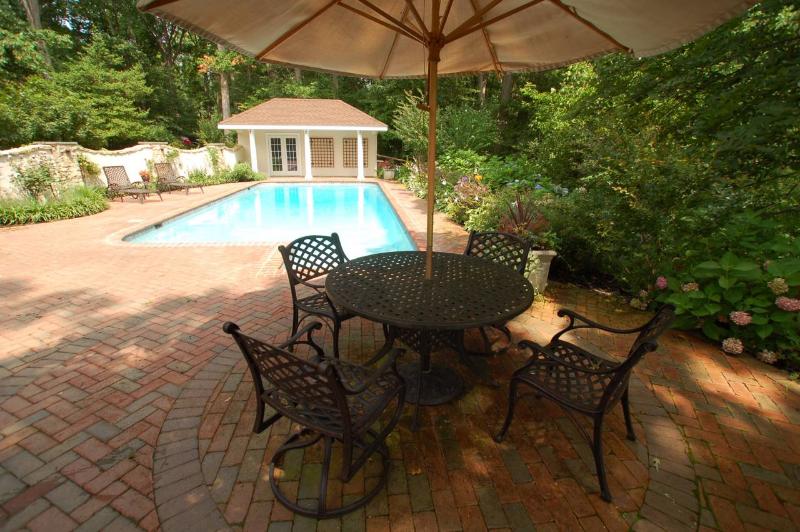
The ground here freezes and expands in winter, then bakes and contracts in summer, cycling above and below freezing many times each season.
A patio built on the right base flexes with that movement and stays level. A patio built on a shortcut base starts moving the first winter.
Signs a Paver Patio Was Installed Well (and Signs It Was Not)
You can often read the quality of an installation just by walking the patio a few years in.
Signs of a quality install:
- No sinking, settling, or soft spots underfoot
- Joints still tight, with the sand intact
- No weeds pushing up through the joints
- Edges holding their line, with no pavers migrating outward
- Water draining off cleanly with no standing puddles
A well-built paver patio rarely needs a full tear-out, which is one of the biggest advantages of pavers over poured concrete.
Signs of a cut-corner install (often visible by year two or three):
- Individual pavers sunken below their neighbors
- Joints widening or washing out
- Weeds growing through the joints
- Pavers creeping outward at the edges
- Standing water after rain, a sign the drainage was never right
How Long Do Paver Patios Last Compared to Other Materials?
For perspective, here is how a paver patio stacks up against the other common ways to build outdoor living space in Maryland:
- Paver patio: 25 to 50+ years, and repairable one stone at a time
- Natural stone patio: 50 to 100+ years
- Standard concrete slab: 20 to 30 years, cracking earlier and visibly
- Stamped concrete: 15 to 25 years before cracking reveals itself through the pattern
- Wood deck: 10 to 15 years in the Maryland climate
- Composite deck: 25 to 30 years
The upfront cost of pavers is higher than plain concrete, but the cost per year of reliable, attractive outdoor space is usually lower, because you are not tearing out and replacing a paver patio the way you eventually will with a slab or a wood deck.
How to Make Sure Your Paver Patio Lasts
The good news is that most of the lifespan equation is within your control before the project even starts. The rest is light, occasional upkeep.
- Hire on quality, not the lowest bid: The cheapest quote is usually cutting the base, the drainage, or the materials, and those corners show up by year three.
- Ask about the base: A good contractor will tell you exactly how deep they excavate and compact, what stone they use, and how they handle edge restraint and joint sand.
- Refresh the joint sand: Modern polymeric sand often holds five to ten years before it needs a quick, inexpensive refresh.
- Keep drainage paths clear: If water starts pooling, address it before the base erodes.
- Fix small issues early: A single settled or cracked paver stone lifts out and resets in a short visit, before it becomes a bigger problem.
Design Choices That Extend the Life and Use of a Paver Patio
The longest-lasting patios are also the ones people actually use, because a patio that anchors a full outdoor room gets cared for:
Paver patterns
Running bond, herringbone, and basketweave are among the most common paver patterns for patios. Beyond looks, a tight interlocking pattern helps the field of pavers work as one surface.
A defined gathering zone
A built-in fire pit gives the space a natural center and extends the season into the cooler months.
Room for how you live
Planning the layout around your patio furniture, dining, and traffic flow from the start means the finished space fits the way you actually use it.
Overhead structure and lighting
A pergola or pavilion adds shade and shelter, and low-voltage lighting carries the space into the evening.
Plan a Paver Patio Built to Last With BR Design Build
At BR Design Build, a paver patio is never just a surface. It is the foundation of an outdoor living space, planned around your property, your drainage, and how you want to use the space. Our team handles design and construction as one coordinated process, so the base, the grading, and the finished surface are all built to work together.
We build paver patios across Anne Arundel County and nearby parts of Prince George’s County, from our complete hardscaping and masonry services through custom patios and paver patio installation.
Request a Free Design Consultation or call 410-266-0553 to talk through your project.
Frequently Asked Questions About How Long Paver Patios Last
A properly installed paver patio in Maryland lasts about 25 to 50 years, and natural stone can last 50 to 100 years or more. The paver stones themselves rarely wear out. What decides how long paver patios last is the base and the drainage underneath, and settled pavers can usually be reset rather than replaced.
Maintenance is light. Plan on an occasional rinse or sweep, a refresh of the polymeric joint sand every several years when you see it thinning, and optional sealing if you want deeper color and easier stain cleanup. Individual paver stones can be lifted and reset if one ever settles or is stained.
Cost depends on the size of the patio, the material, the design complexity, and site conditions such as access, grading, and drainage. Because every project is custom, the most accurate way to get a number is an on-site assessment. We walk your property, discuss your goals, and provide a detailed, honest estimate.
Sealing is optional, not required, and pavers last for decades unsealed. The main downsides are cost and upkeep, since sealer needs to be reapplied every few years, and using the wrong sealer can trap moisture or change the finish more than expected. A penetrating sealer suited to the material and climate is the safer choice.
Outdoor living space is a genuine selling point in the Maryland market, and a well-built paver patio is often viewed as a lasting, attractive feature by buyers. The exact return varies by project, neighborhood, and how well the patio fits the home, so treat added value as a benefit rather than a guaranteed figure.
Plain concrete usually costs less up front than a paver patio. Over the full lifespan the math often shifts, because concrete tends to crack and eventually needs replacement, while a paver patio lasts longer and stays repairable one stone at a time. Many homeowners find the cost per year of use favors pavers.
It depends on the site and the design. A ground-level paver patio is often comparable to or less than a wood deck up front, and it typically lasts longer with less maintenance. Decks can make more sense on sloped or elevated areas where a raised structure fits the grade. The right answer comes down to your property.
Yes, with care. A gentle pressure wash keeps a paver patio looking clean, but too much pressure or the wrong tip can blow out the joint sand and etch the paver surface. Use a lower setting, keep the nozzle moving, and plan to top off the joint sand afterward if needed.
Sealing is optional. If you choose to seal, most manufacturers suggest resealing roughly every three to five years, sooner for patios in full sun or heavy use. Always follow the sealer manufacturer’s schedule for the specific product and paver.
Pavers can be installed in most seasons, but spring and fall often provide the most workable conditions in Maryland, with moderate temperatures and drier ground for base work. Installation is still possible in summer and in milder winter stretches, as long as the ground is workable and conditions allow proper compaction.
No. Sand alone does not provide the load-bearing, well-draining foundation a patio needs, and pavers laid on sand over soil tend to shift and settle quickly, especially through Maryland’s freeze-thaw cycles. A compacted crushed-stone base under a thin bedding layer is what makes a paver patio last.